 electrown.com
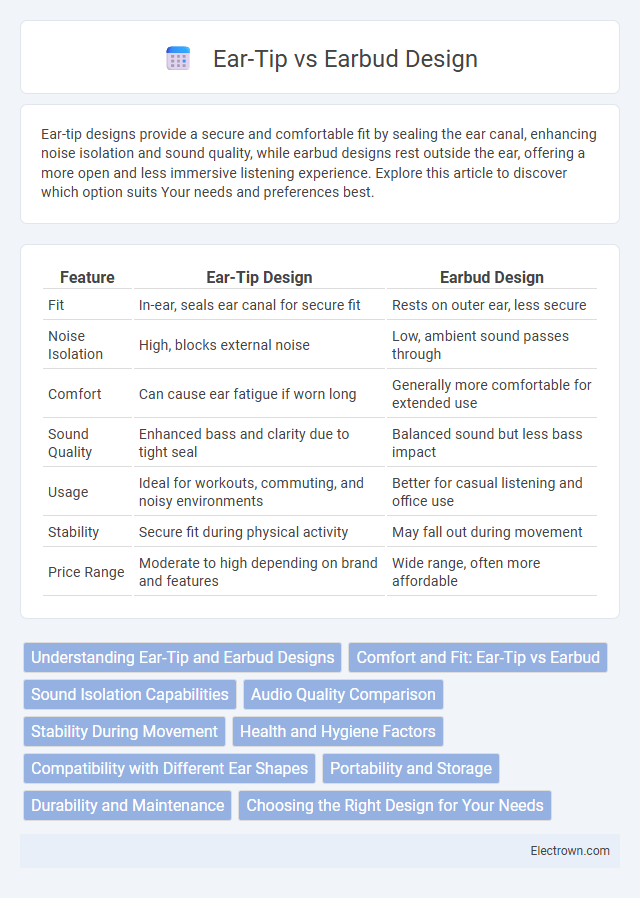
 Ear-tip designs provide a secure and comfortable fit by sealing the ear canal, enhancing noise isolation and sound quality, while earbud designs rest outside the ear, offering a more open and less immersive listening experience. Explore this article to discover which option suits Your needs and preferences best.
Table of Comparison
| Feature | Ear-Tip Design | Earbud Design |
|---|---|---|
| Fit | In-ear, seals ear canal for secure fit | Rests on outer ear, less secure |
| Noise Isolation | High, blocks external noise | Low, ambient sound passes through |
| Comfort | Can cause ear fatigue if worn long | Generally more comfortable for extended use |
| Sound Quality | Enhanced bass and clarity due to tight seal | Balanced sound but less bass impact |
| Usage | Ideal for workouts, commuting, and noisy environments | Better for casual listening and office use |
| Stability | Secure fit during physical activity | May fall out during movement |
| Price Range | Moderate to high depending on brand and features | Wide range, often more affordable |
Understanding Ear-Tip and Earbud Designs
Ear-tip designs create a secure seal within your ear canal, enhancing sound isolation and bass response, while earbud designs rest on the outer ear, offering a more comfortable fit for prolonged use without deep insertion. Choosing between ear-tip and earbud depends on your preference for noise isolation and comfort during extended listening sessions. Ear-tips typically provide better sound clarity and passive noise cancellation, whereas earbuds prioritize ease of wear and reduced ear fatigue.
Comfort and Fit: Ear-Tip vs Earbud
Ear-tip designs provide a secure and customizable fit by sealing the ear canal, enhancing noise isolation and comfort during extended wear. Earbuds rest on the outer ear, offering a looser fit that can be more comfortable for those who dislike in-ear pressure but may lack stability during vigorous activities. Choosing between ear-tip and earbud styles depends on personal preferences for comfort, stability, and sound isolation, with ear-tips often favored for immersive audio experiences and earbuds preferred for casual use.
Sound Isolation Capabilities
Ear-tip designs provide superior sound isolation by creating a secure seal within the ear canal, effectively blocking external noise for an immersive listening experience. In contrast, earbuds rest on the outer ear without a tight seal, allowing ambient sounds to penetrate more easily and reducing overall noise isolation. Enhanced isolation from ear-tips is especially beneficial in noisy environments, improving sound clarity and bass response.
Audio Quality Comparison
Ear-tip designs provide superior audio quality by creating a better seal in the ear canal, which enhances bass response and isolates external noise more effectively than traditional earbuds. Earbuds often sit on the outer ear, resulting in less sound isolation and weaker bass, which can reduce overall audio clarity. Choosing ear-tip headphones can significantly improve your listening experience with richer sound details and immersive audio performance.
Stability During Movement
Ear-tip designs provide enhanced stability during movement by creating a snug seal within the ear canal, reducing the likelihood of slipping or falling out during physical activities. Earbuds typically rest on the outer ear, which can result in less secure fit and increased risk of displacement during dynamic motions. Athletes and active users often prefer ear-tip models for their superior retention and consistent audio performance in motion-intensive environments.
Health and Hygiene Factors
Ear-tip designs often provide a more secure fit and better noise isolation, reducing the need to increase volume and thus protecting hearing health. These designs typically use replaceable silicone or foam tips, which can be cleaned or swapped regularly to maintain hygiene and minimize ear infections. Earbuds, resting outside the ear canal, may accumulate more surface bacteria and rely on frequent wiping, making them potentially less hygienic over time.
Compatibility with Different Ear Shapes
Ear-tip designs offer customizable silicone or foam tips that enhance compatibility with various ear shapes by providing a secure and comfortable seal. Earbuds, typically featuring a fixed shape, may not fit all ears as securely, potentially affecting sound isolation and comfort. Your choice should consider how well each design conforms to your unique ear anatomy for optimal audio performance and comfort.
Portability and Storage
Ear-tip designs typically offer a more compact and lightweight form, making them highly portable and easy to store in small cases or pockets. Earbuds often have larger housings but can be less secure for storage without specialized cases, increasing the risk of damage or tangling. Your choice impacts how conveniently you carry and protect your audio gear during daily commutes or travel.
Durability and Maintenance
Ear-tip designs generally offer superior durability due to replaceable silicone or foam tips that resist wear and allow for easy cleaning, extending the lifespan of the earphones. Earbuds, often made with fixed plastic housings and integrated speakers, are more susceptible to damage from sweat and debris buildup, making maintenance more challenging. Proper cleaning and periodic replacement of ear-tips improve hygiene and sound clarity, whereas earbuds require careful handling to avoid internal damage and degradation over time.
Choosing the Right Design for Your Needs
Ear-tip designs offer a secure, noise-isolating fit ideal for active use and enhanced sound quality, while earbuds provide a more open fit prioritizing comfort and ambient awareness. Selecting the right design depends on lifestyle factors such as exercise habits, desired sound isolation, and comfort preferences. For users seeking superior bass and passive noise cancellation, ear-tips typically outperform earbuds in diverse environments.
Ear-Tip vs Earbud Design Infographic